
Contents
Sentiment Cools, but Risk Positioning Is Still Elevated
Why Cut Equities Without Rotating into Bonds
AI Investment Looks More Certain, Credit Concerns Grow
Sector Choices Reflect Screening, Not Broad Defense
Contrarian Indicators Flag Fragility, Not a Downturn Clock
What Evidence Is Needed Next
This content is compiled from publicly available information and research reports. It does not constitute investment advice or represent any individual's views. For educational reference only; please read critically.
Fund managers have begun to retract some risk, but not in a coherent defensive allocation. Cash is rising and equity overweight is falling, alongside a deeper bond underweight and persistent semiconductor crowding. The key market debate is shifting from whether growth can continue to whether growth, rates, and financing costs can all be sustained simultaneously.
Sentiment Cools, but Risk Positioning Is Still Elevated
BofA's September Global Fund Manager Survey shows average cash rose to 3.9% from 3.5% in August, global equity net overweight fell to 49% from 56%, and the composite sentiment index dropped to 7.0 from 8.0, a three-month low. Compared with August's high-risk positioning, the clearest September change is that institutions began to build buffers and reduce some risk exposure.
The survey ran from September 4–10 and was published September 15. The global questionnaire had 170 respondents directly managing $470 billion in assets; including regional surveys, the total sample was 190. It reflects judgments and positioning during the survey period, not an instantaneous snapshot of every market move after publication.
The three figures are not measured the same way. The 3.9% is average cash as a share of assets; the 49% equity net overweight is the percentage saying overweight minus the percentage saying underweight, not 49% of fund assets allocated to equities. The sentiment index combines growth expectations, cash, and equity positioning and cannot be converted directly into buy or sell amounts.
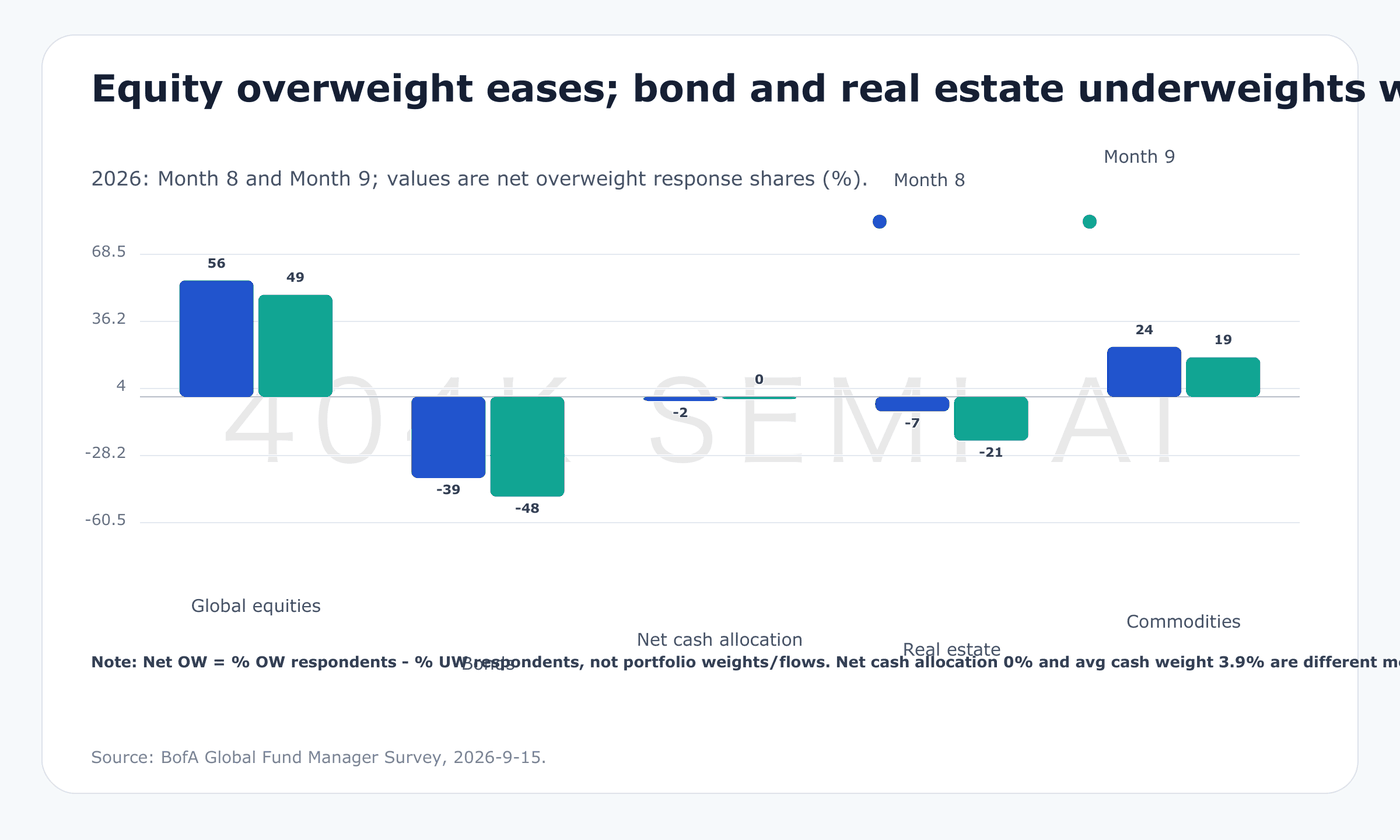
That limits inferences from monthly changes. The August global survey had 180 respondents managing $525 billion, while both respondent count and sample assets changed in September. The difference in assets under management between the two periods is not redemptions, and a lower net overweight does not prove every fund was cutting positions. The survey can identify a shifting consensus, but it cannot replace actual flow data.
Still, the cooling matters. Cash rose 0.4 percentage points, giving portfolios more room to adjust; although equity net overweight declined, it remained about 0.9 standard deviations above its own historical average. September is therefore closer to a pullback from elevated risk levels than to broad pessimism and low positioning.
Why Cut Equities Without Rotating into Bonds
The traditional defensive playbook is to reduce equities and add bonds, but the September survey showed a different mix: net underweight bonds widened to 48% from 39%, net underweight real estate widened to 21% from 7%, and net overweight commodities fell to 19% from 24%. Cash's greater appeal did not produce a consistent preference for other defensive assets.
