
目录
This Week’s Assessment
AI Chips, Advanced Packaging and Servers
Optical Communications, CPO, PCBs and High-Speed Interconnects
Data Center Cooling, Power Systems and Electricity Supply
Robotics, Edge AI and Hardware Applications
Space, Quantum Computing and AI Software Applications
Debates, Counterevidence and Next Week’s Watchlist
AI demand is translating into server revenue, while power availability, optical components and working capital increasingly determine delivery. We favor suppliers that can ship consistently, protect margins and collect cash. The main risk is recognizing procurement intentions, planned capacity and long-term technology roadmaps as current earnings before they materialize.
This Week’s Assessment
AI demand is beginning to convert into revenue, and delivery pressure is spreading across the supply chain. Hon Hai Precision’s August revenue and quarterly outlook, disclosed on September 7, provided tangible evidence of server demand. AMD subsequently discussed a supply review, Vertiv raised its long-term growth targets, and Oracle reported newly commissioned capacity. Together, these developments sharpen the industry’s central question: who can assemble the equipment, connect the power and deliver an operational data center to the customer?
This shifts our investment priorities toward delivery capability and cash collection. Customers’ urgency to secure compute could improve order terms for qualified lasers, packaging and testing capacity, and power distribution systems. Yet shortages also force suppliers to purchase equipment, build inventory and make advance payments. Revenue growth and cash pressure can coexist; beneficiaries across the chain have very different business economics.
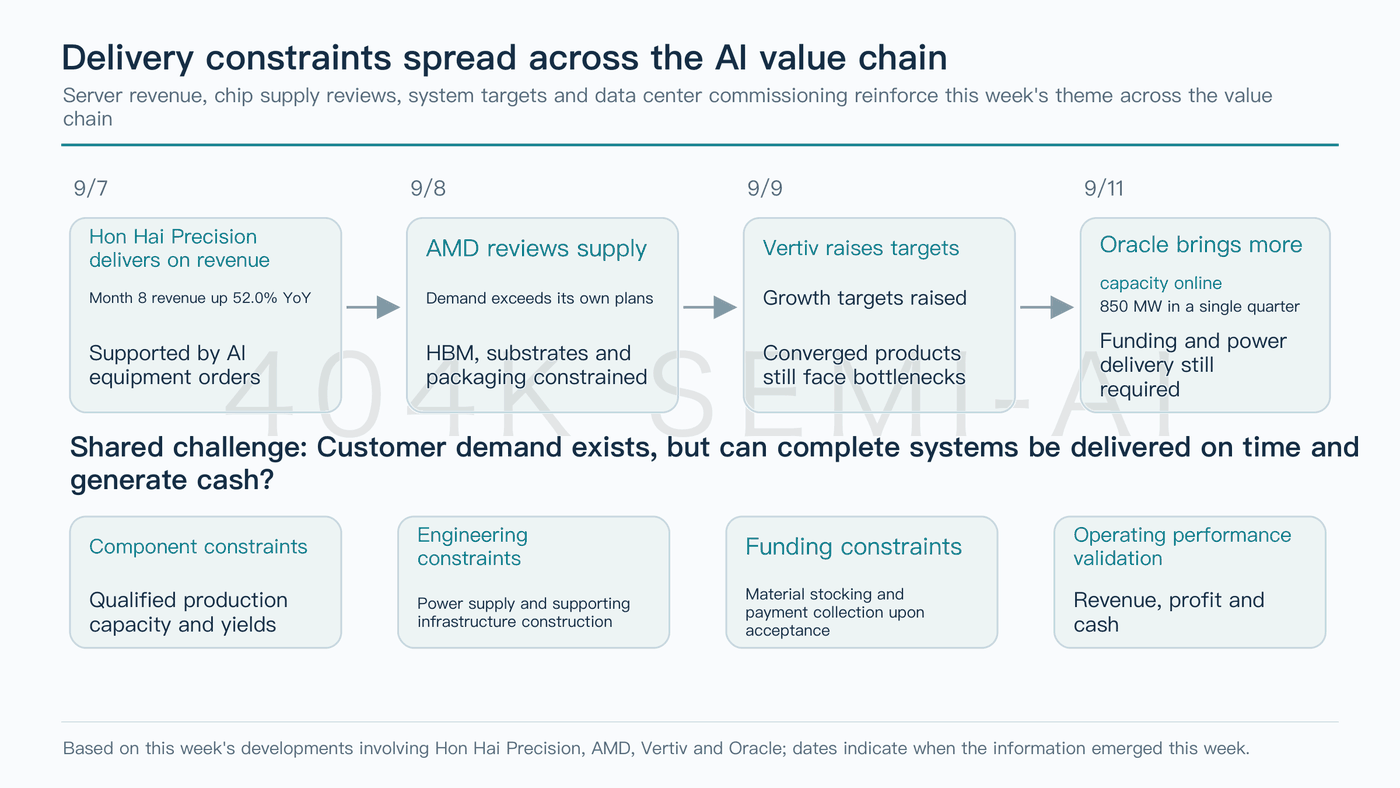
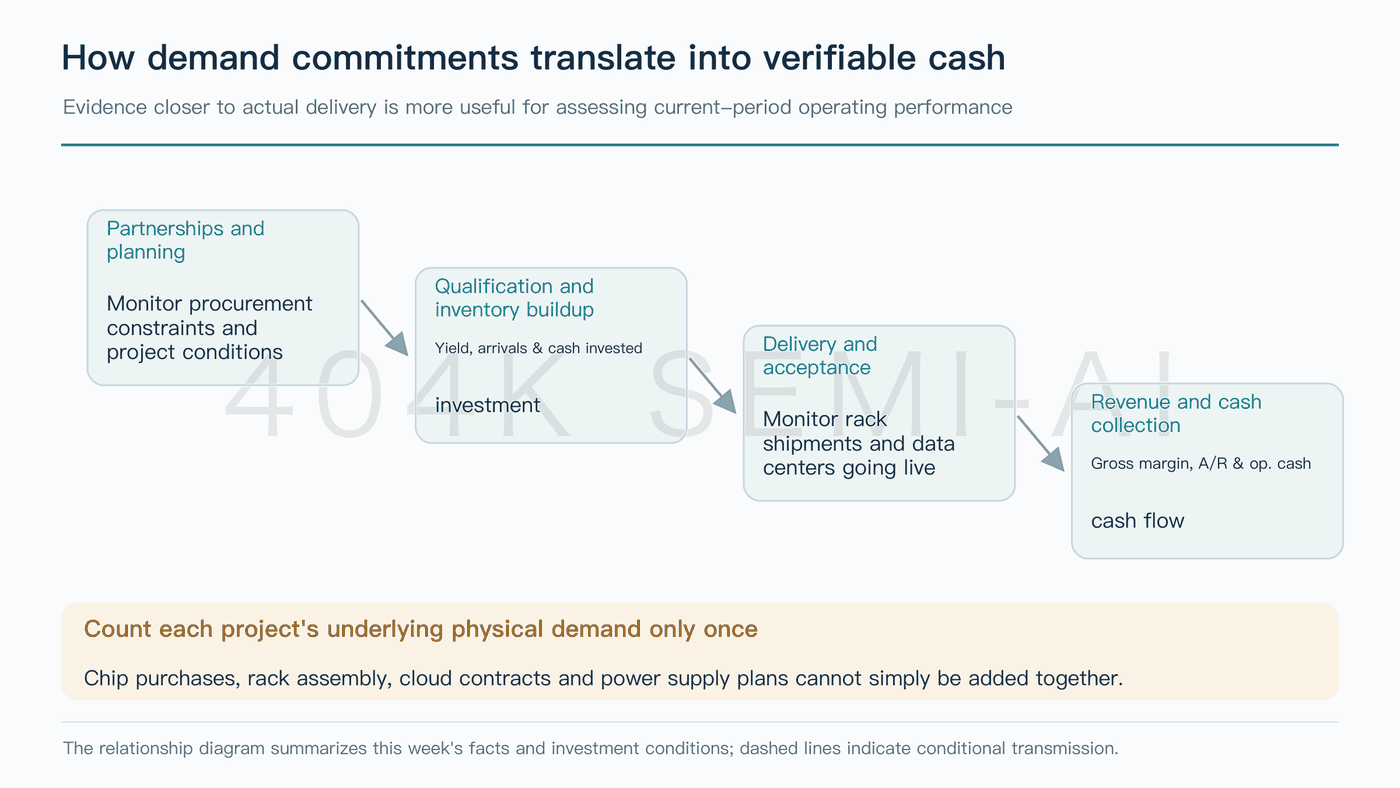
Demand evidence needs to be ranked. Monthly revenue and commissioned capacity are closest to actual delivery. Management growth targets indicate resource allocation, while partnership ceilings, roadmaps and market estimates depend on more conditions and warrant less weight in near-term earnings forecasts. Chip purchases, assembly revenue, lease contracts and power plans for the same data center also cannot simply be added together as independent sources of demand.
The more important debate this week is who retains the incremental value. Optical component shortages may strengthen pricing power for established producers. More expensive server components may increase assemblers’ working capital requirements. Expansion into integrated power and liquid cooling systems broadens revenue opportunities but also increases delivery responsibilities. Assessing profit potential requires looking at pricing, yields, acceptance cycles and financing costs together.
Further validation should focus on more than new capital expenditure announcements. More useful evidence includes whether rack shipments convert into cash, optical capacity additions produce qualified output, grid connections are completed on schedule, and customer payments for compute cover operating and capital costs. We remain positive on infrastructure demand but recognize long-term commitments in stages as evidence develops.
AI Chips, Advanced Packaging and Servers
Server revenue now provides evidence of demand; the next question is growth quality. Hon Hai Precision reported August revenue of NT$921.8 billion, up 52.0% year over year and down 2.6% month over month, and said third-quarter visibility had improved from the prior month. AI equipment demand within cloud and networking products was the main driver. This supports continued strength in AI rack demand, but group revenue cannot all be classified as AI revenue, nor can one month’s year-over-year growth establish a margin outlook.
Industry developments around Amazon’s increased AI rack procurement point to distinct roles for Alchip in chip design, Wiwynn in rack assembly and switch trays, and Hon Hai Precision in CPU trays. Rising application-specific integrated circuit (ASIC) volumes will change the division of work across the supply chain, but revenue recognition differs by supplier. Design projects reaching production, tray deliveries and full-rack acceptance each require separate tracking.
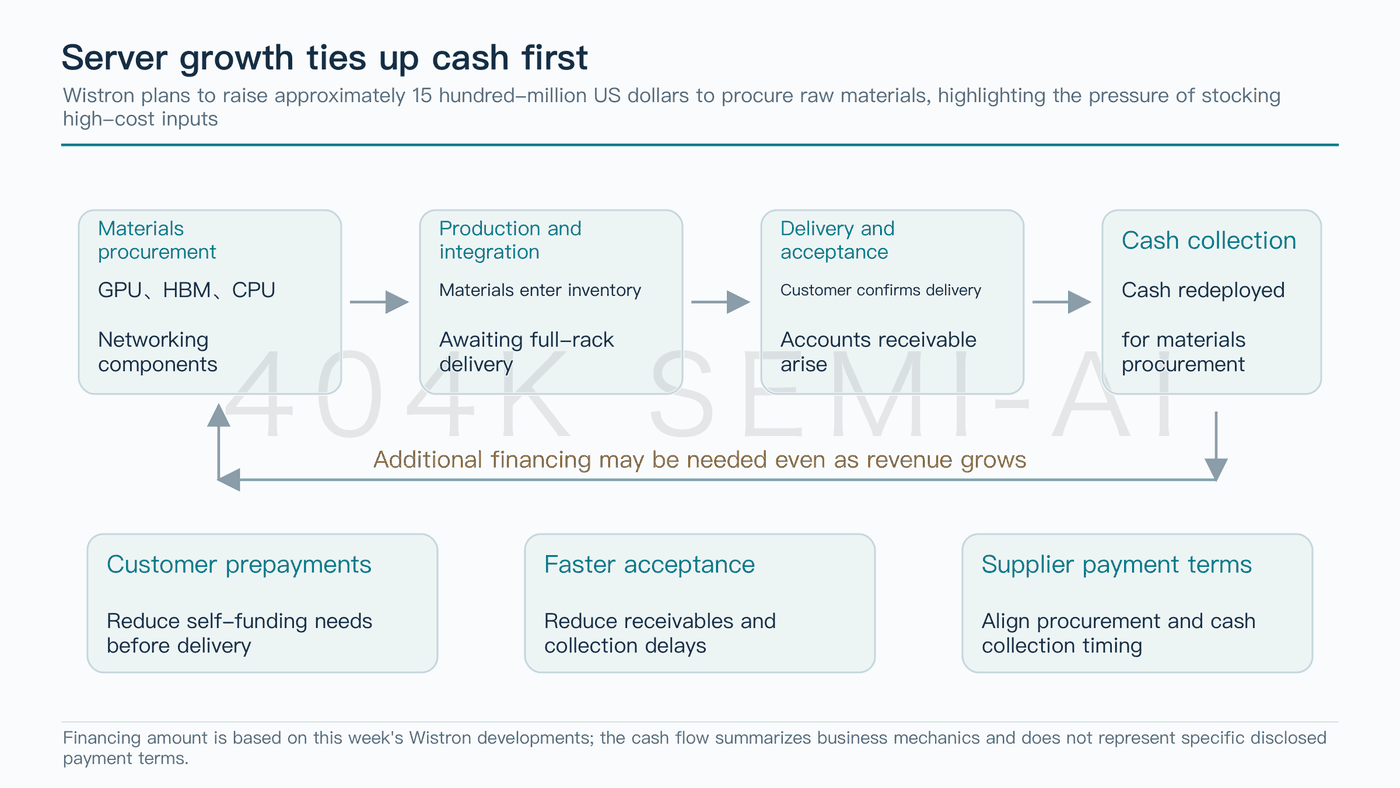
Working capital is becoming a constraint on server growth. Wistron plans to raise approximately US$1.5 billion to purchase AI server materials, illustrating the need to secure GPUs, high-bandwidth memory (HBM), CPUs and networking components ahead of delivery as orders grow. More expensive components increase the cash tied up in inventory and receivables. Assemblers’ ability to obtain customer advances, shorten acceptance periods or extend supplier payment terms will directly influence how quickly they can grow.
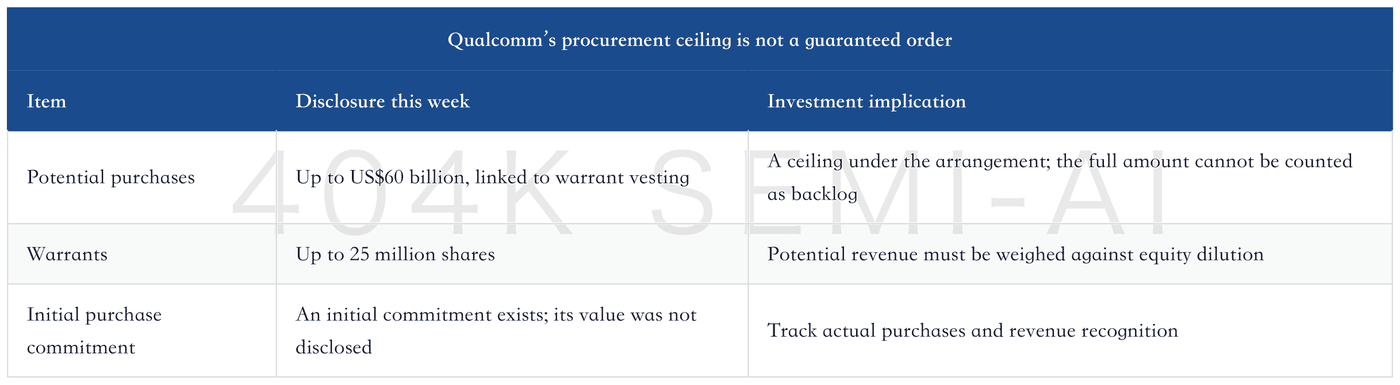
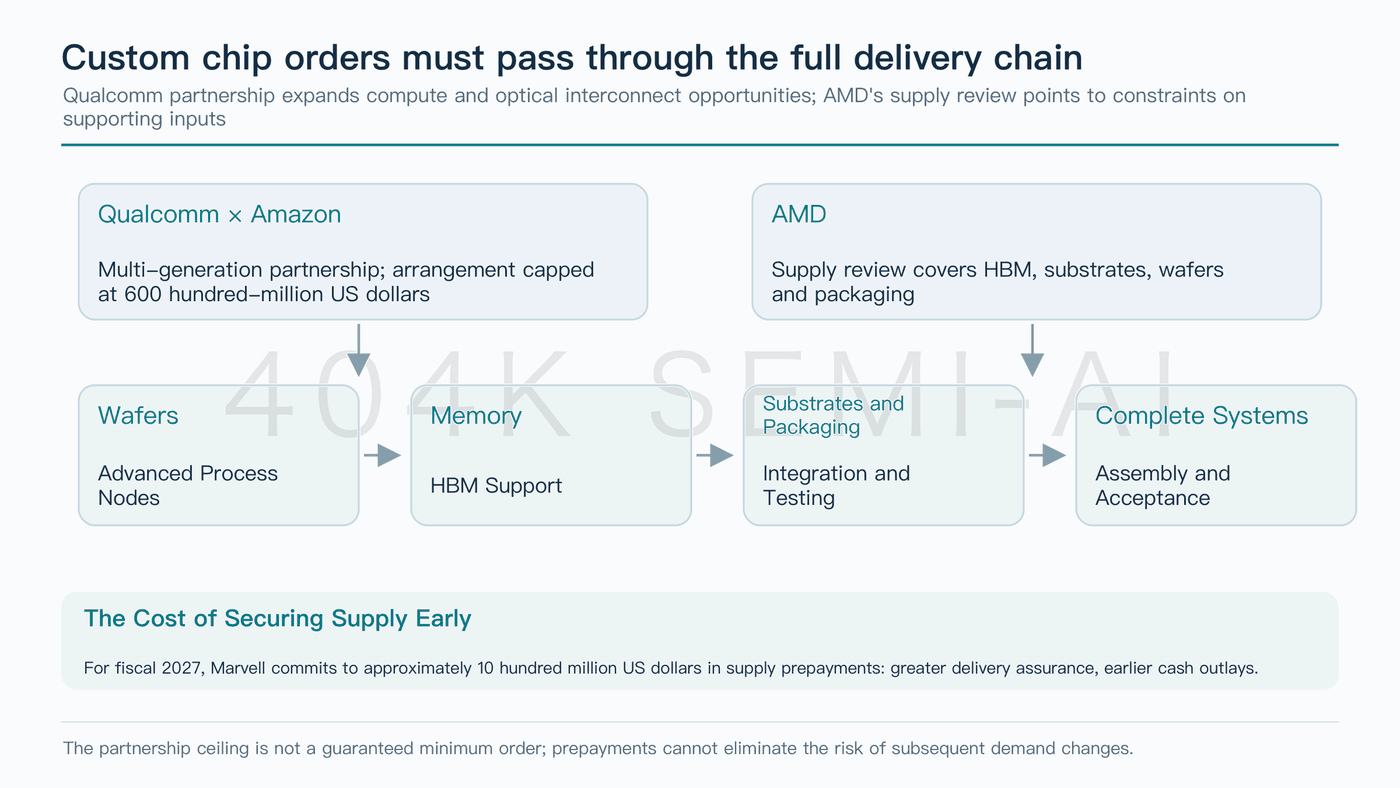
Chip competition increasingly tests both compute and connectivity capabilities. Qualcomm and Amazon announced a multigeneration AI infrastructure collaboration covering custom inference chips and high-bandwidth optical interconnects. The opportunity extends beyond individual chips to supporting interconnects, but the partnership’s duration does not establish a revenue timetable. Product qualification, binding purchases and production costs will determine its profitability.
AMD offered another form of validation at the Citi conference: demand for 2027 exceeds its planning assumptions, prompting a renewed supply review. Constraints span HBM, substrates, wafers and advanced packaging, showing that expanding any single input is insufficient to guarantee complete system shipments. Marvell’s commitment to approximately US$1 billion in supply prepayments for fiscal 2027 likewise shows suppliers committing cash ahead of future deliveries. Prepayments improve supply assurance but do not eliminate the risk of changing demand.
The advanced packaging thesis is expanding from the number of packages to the processing required for each device. ASE Technology’s positioning in optical engines and optical engine–ASIC module assembly suggests optical integration will increase packaging work. Additional steps, however, also lengthen processing time and introduce yield, testing and equipment compatibility challenges. Higher revenue content does not necessarily produce proportional profit growth.
Testing remains an easily underestimated delivery constraint. At a conference this week, Teradyne emphasized that advanced nodes, chiplets, HBM and co-packaged optics (CPO) are increasing test intensity. More expensive devices make early defect detection more valuable, avoiding problems discovered only after assembly. This supports demand for testing, probes, burn-in and inspection, but customers and qualification cycles vary by process. A single total addressable market estimate cannot serve as a revenue forecast for every supplier.
Early development also faces friction in sourcing small batches of custom hardware. Industry reporting highlighted the need for custom test substrates, sockets, evaluation boards and load boards in engineering validation. Traditional volume suppliers may not prioritize these small orders. Even when eventual production equipment is sufficient, supporting hardware can slow the sample stage. Key follow-ups are whether customers place repeat orders and whether equipment and consumables revenue tracks actual testing volumes.
