Contents
Executive Summary
Catalyst Progression
Weekly Memory Evidence Chain
Weekly Performance Across Memory Equities
Memory Equities Performance Summary
DRAM & HBM: Allocation Power, LTAs, and Customer Qualification
Institutional Assumptions on DRAM Supply
LTA Structures and Analytical Boundaries
LPDDR & SoCAMM: AI CPU Spillover and Rack-Scale Memory Architecture
Memory Architecture Comparison in Rack Specifications
NAND, eSSDs & Cache Tiering: Inference, RAG, and Operating Leverage
Citi NAND Supply-Demand Forecasts
Architectural Trade-Offs: QLC vs. TLC
Nearline HDDs: AI Data Lakes, Exabyte Deliveries, and Cash Conversion
Equipment, Test & Materials: Second-Order Capex Beneficiaries
Operating Performance Divergence Across Korean Test & Metrology Vendors
Downstream Cost Absorption and Demand Destruction
Investment Hierarchy, Risks, and Falsification Triggers
Research and Investment Priorities Across the Memory Value Chain
Next Week's Monitoring Framework
Weekly Monitoring Framework and Downside Triggers
Incremental memory demand broadened this week from High-Bandwidth Memory (HBM) into CPU-attached memory and enterprise SSDs (eSSDs). Investors should prioritize customer lock-in, actual deployment configurations, and order fulfillment rather than mistaking price-hike forecasts for realized earnings. Key counter-theses to monitor include consumer-side supply easing, algorithmic cache compression, and accelerating fab capacity expansion.
Executive Summary
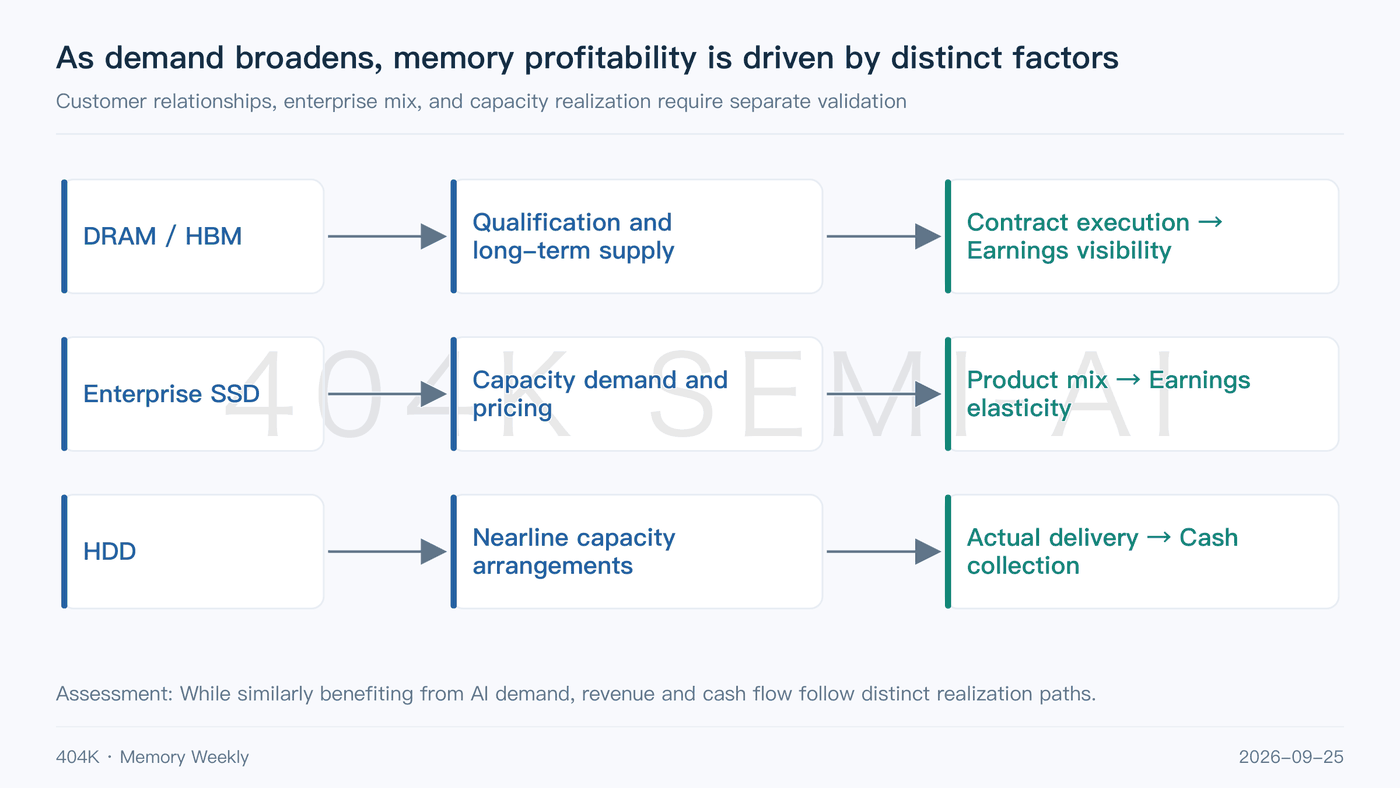
Opportunities are broadening across the memory value chain, but earnings mechanics diverge sharply by product tier. HBM and leading-edge DRAM depend on customer qualifications, product roadmaps, and long-term supply agreements. Enterprise SSDs rely on bit volume expansion and ASP recovery. Hard disk drives (HDDs) require translating production allocation into nearline shipments and free cash flow. Lumping these subsectors into a single price-hike thesis overlooks the prerequisites for cash realization.
Evidence supporting demand diffusion emerged across multiple fronts this week:
A Bank of America supply-chain survey pointed to sustained upward momentum in DRAM contract pricing.
Enterprise SSD procurement checks indicated US cloud service providers (CSPs) are raising demand forecasts.
Akamai disclosed a major CPU compute contract alongside associated capital expenditure arrangements.
The first two developments reflect hyperscalers scrambling to secure allocation, while the third converts AI CPU demand into tangible capital commitments. Together, they validate broadening memory demand, though they do not guarantee market share allocations among individual suppliers.
Investment prioritization must remain anchored in cash-generation capabilities. For SK Hynix, Micron, and Samsung Electronics, focus centers on leading-edge products, customer relationships, and contract execution. SanDisk and Kioxia must demonstrate margin elasticity through a rising enterprise SSD mix, customer qualifications, and sustained pricing gains. Seagate Technology and Western Digital depend on nearline exabyte delivery and free cash flow (FCF) conversion. While equipment and test vendors benefit from fab expansion, their revenue recognition lags chip pricing cycles due to tool procurement lead times, delivery schedules, and customer fab acceptance.
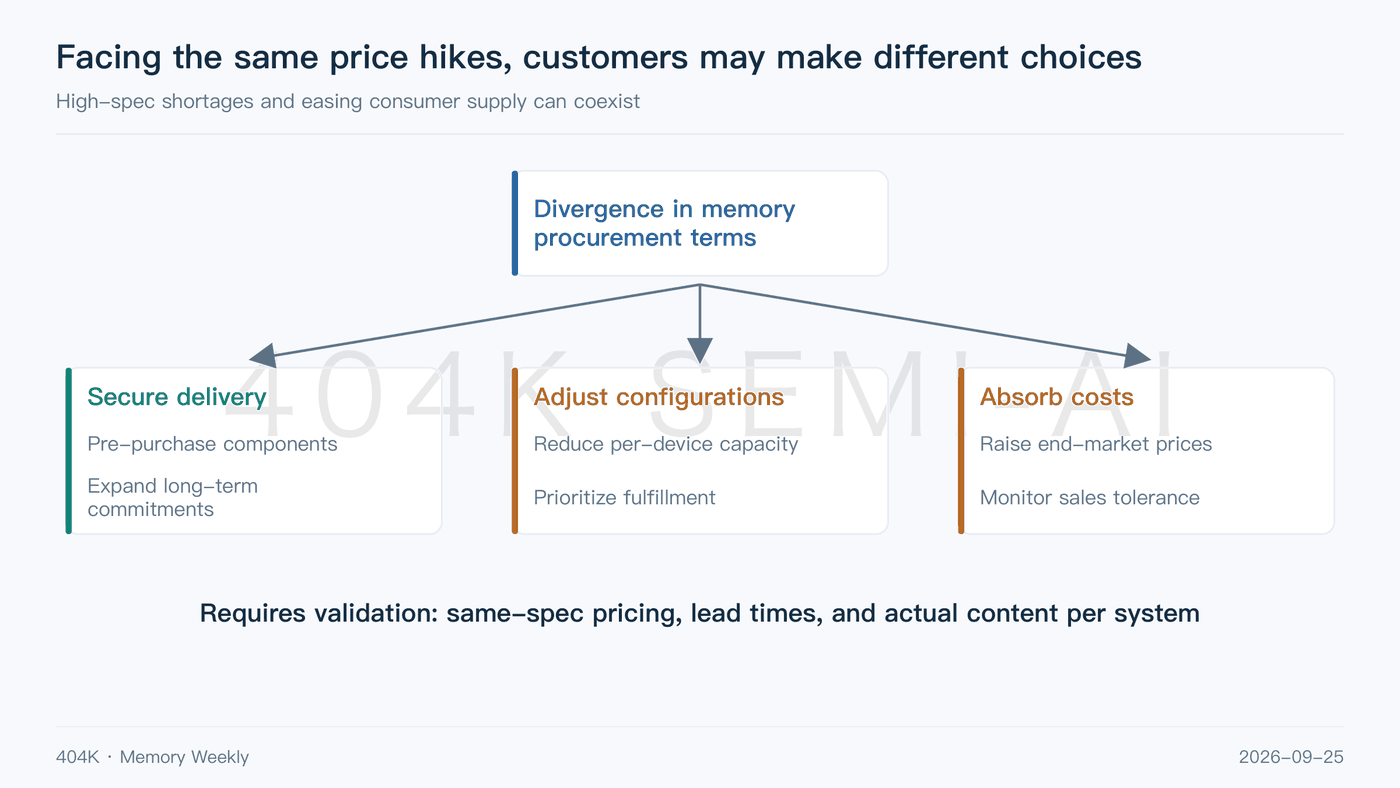
The most common analytical misstep in this cycle is conflating structural shortages in specific tiers with universal, across-the-board scarcity. Acer indicated that supply in certain memory segments has normalized, with DDR4 even tipping into oversupply; concurrently, Phison Electronics reaffirmed persistent DRAM bottlenecks in edge AI deployments. These perspectives are not mutually exclusive: divergences in procurement channels, product specifications, and customer allocation explain the contrasting experiences. Investors must track which specific product nodes remain tight, which hyperscalers are willing to issue prepayments, and which OEM platforms are actively de-spec'ing memory configurations.
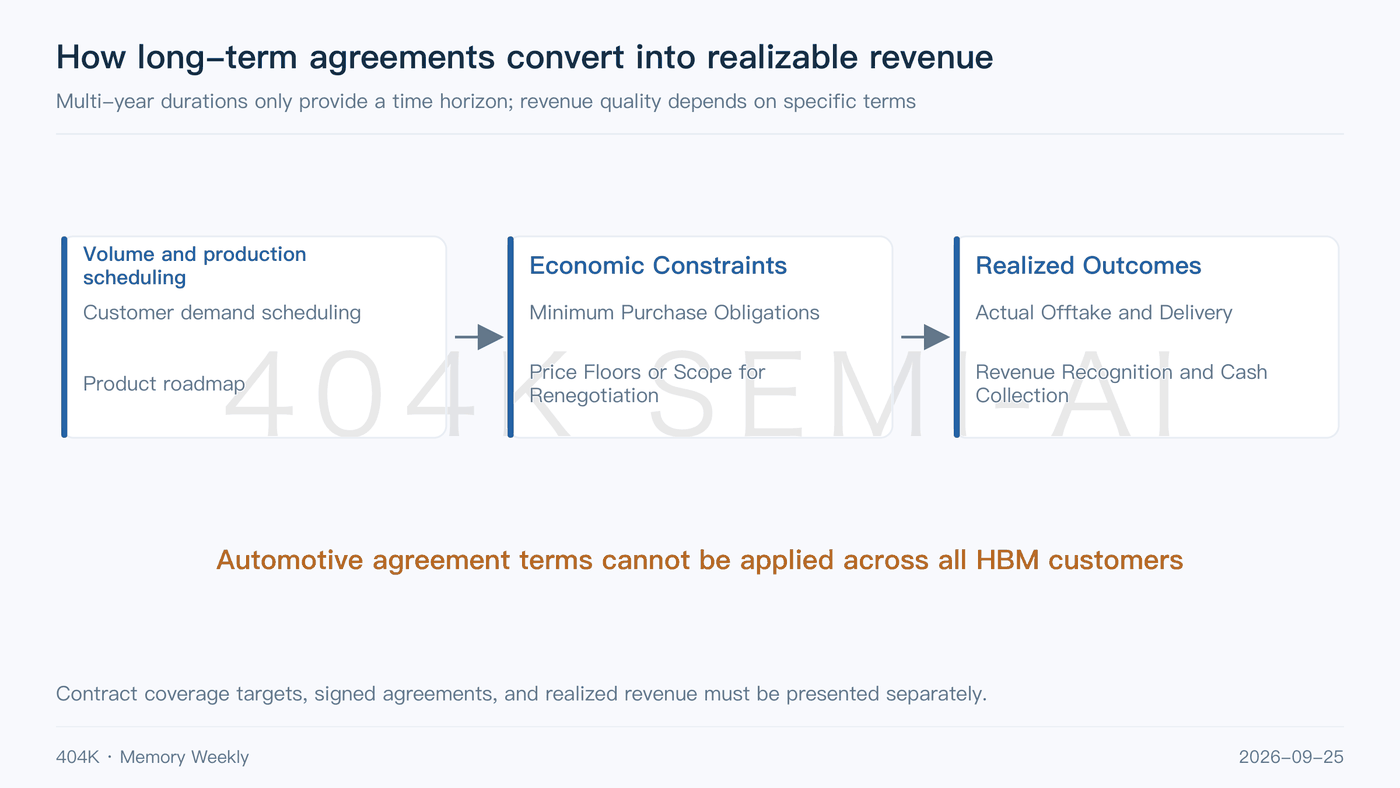
Long-Term Agreements (LTAs) are not an unconditional guarantee of profits. While Samsung Electronics, SK Hynix, and Micron are expanding long-term supply frameworks, contract terms vary widely—some lock in strict volume commitments, while others establish price collars or technology roadmaps. Absent uniform price floors and binding default penalties, multi-year supply pacts cannot be treated as locked-in, high-margin revenue. For chipmakers, LTAs enhance production visibility but can also cap merchant upside during rapid spot price rallies.
Our weekly takeaway: demand is broadening, but earnings quality is bifurcating. Leading-edge capacity retains structural pricing power, and emerging eSSD use cases warrant increased attention. Conversely, legacy consumer products, unaccepted tool orders, and equities trading purely on long-term technological narratives warrant wider valuation discounts. The decisive litmus test across upcoming earnings reports is whether realized ASPs, bit shipments, gross margins, and cash conversion improve in tandem.
Catalyst Progression
The narrative evolved in a clear progression this week: procurement expectations strengthened first, underlying workload mechanics clarified next, and binding capital commitments emerged last. The timeline below organizes these developments chronologically. Preexisting technical specifications and historical contracts are cited strictly to contextualize this week's thesis, not as newly broken events.
Weekly Memory Evidence Chain
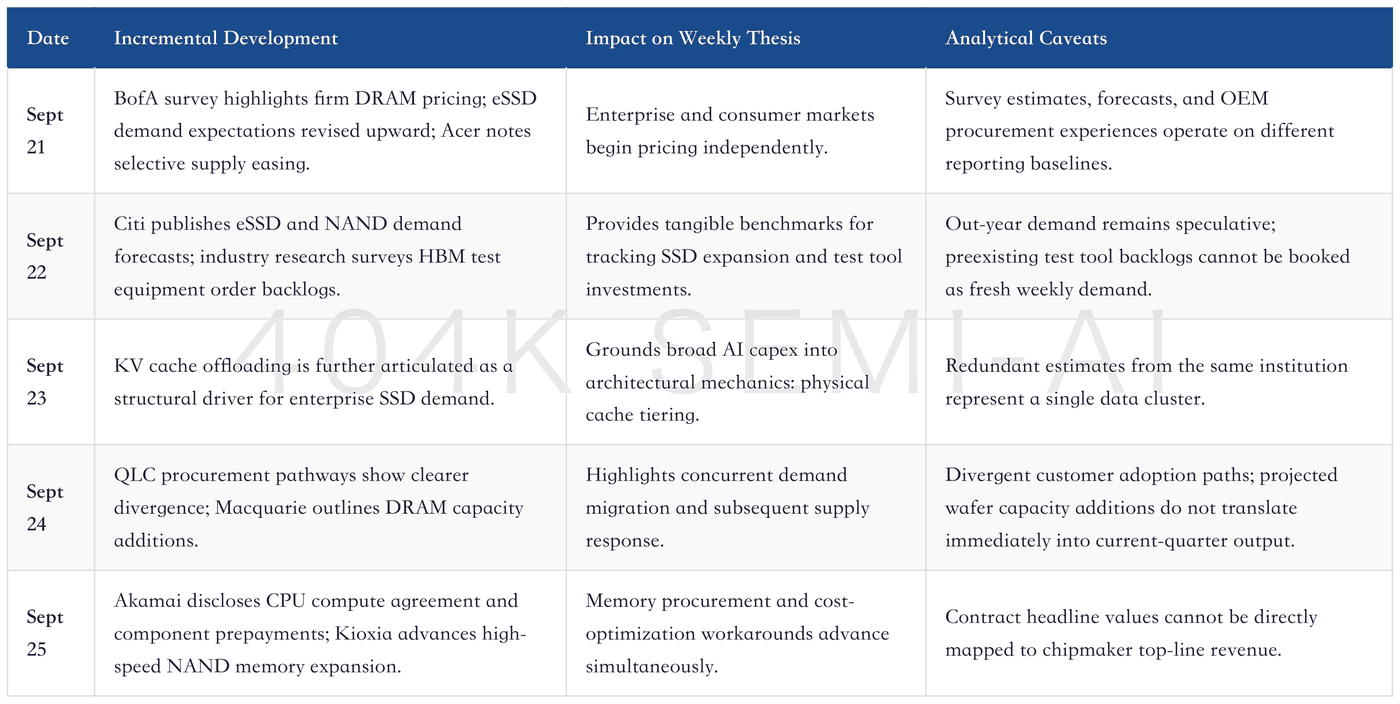
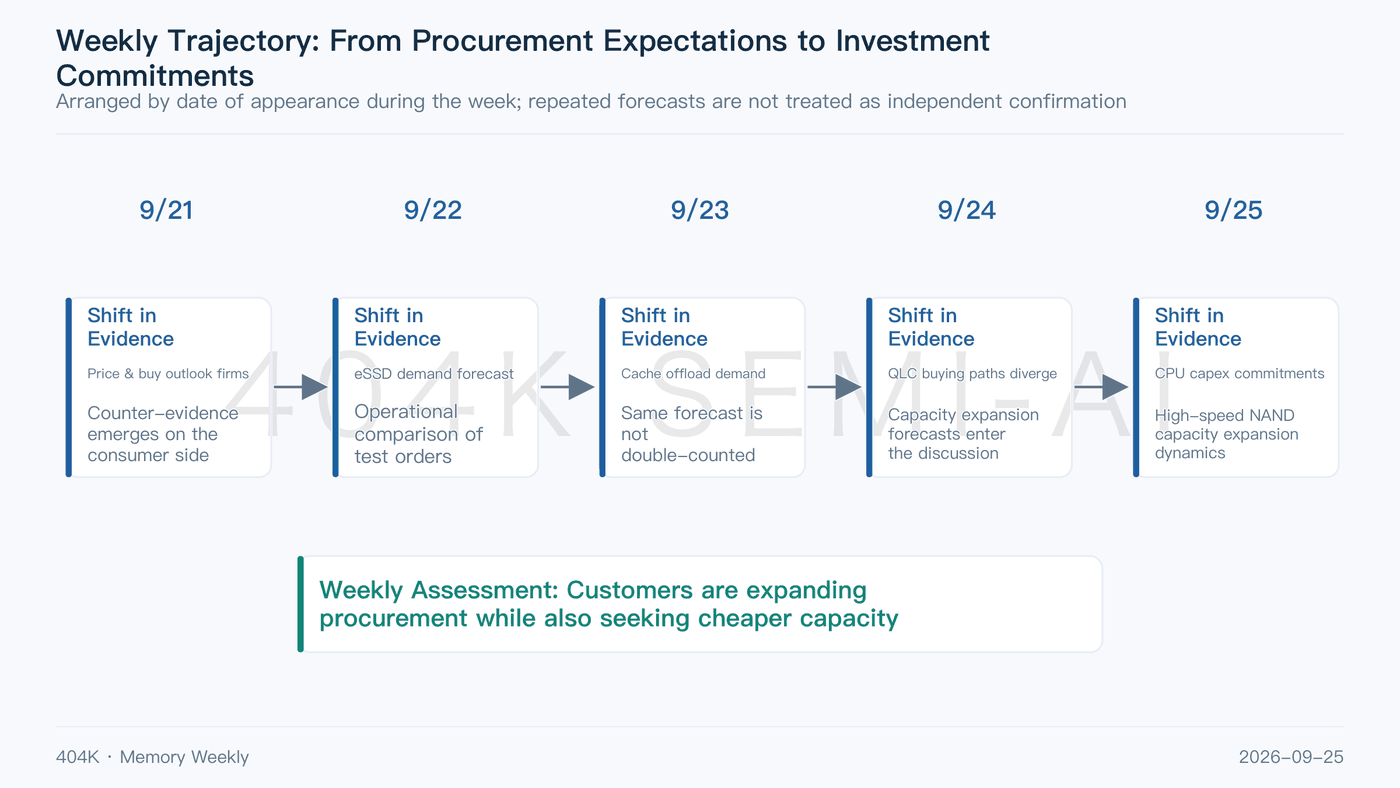
This progression provides a more grounded framework than a simple price-hike narrative: hyperscalers are expanding procurement while aggressively engineering lower-cost storage architectures. Vector databases, cache offloading, and CPU-side memory allocations redirect demand across disparate product lines, while QLC adoption, algorithmic cache compression, and CXL-based memory expansion place a ceiling on premium tier pricing power. Long-term supplier profitability hinges on how long customer willingness-to-pay persists and whether suppliers can successfully align their product mix.
Weekly Performance Across Memory Equities
Market performance has begun to diverge, but share price volatility cannot substitute for operational verification. The table below outlines the trading windows for each asset: US equities cover the period through September 24, Korean equities through September 23, Kioxia through September 25, and Seagate's performance window begins on September 17. Accordingly, performance must be evaluated within each specific window rather than through rigid cross-market rankings.
Memory Equities Performance Summary
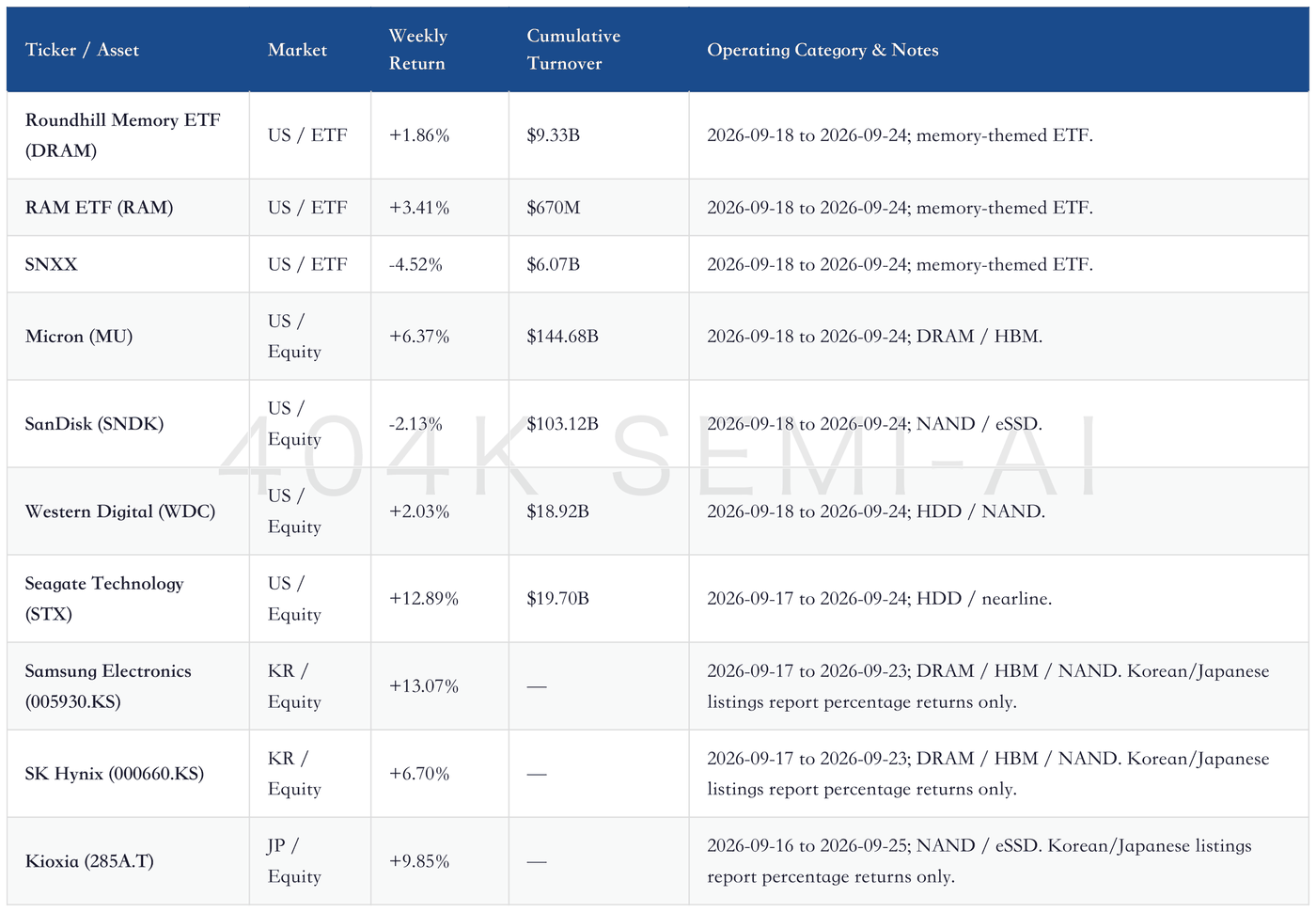
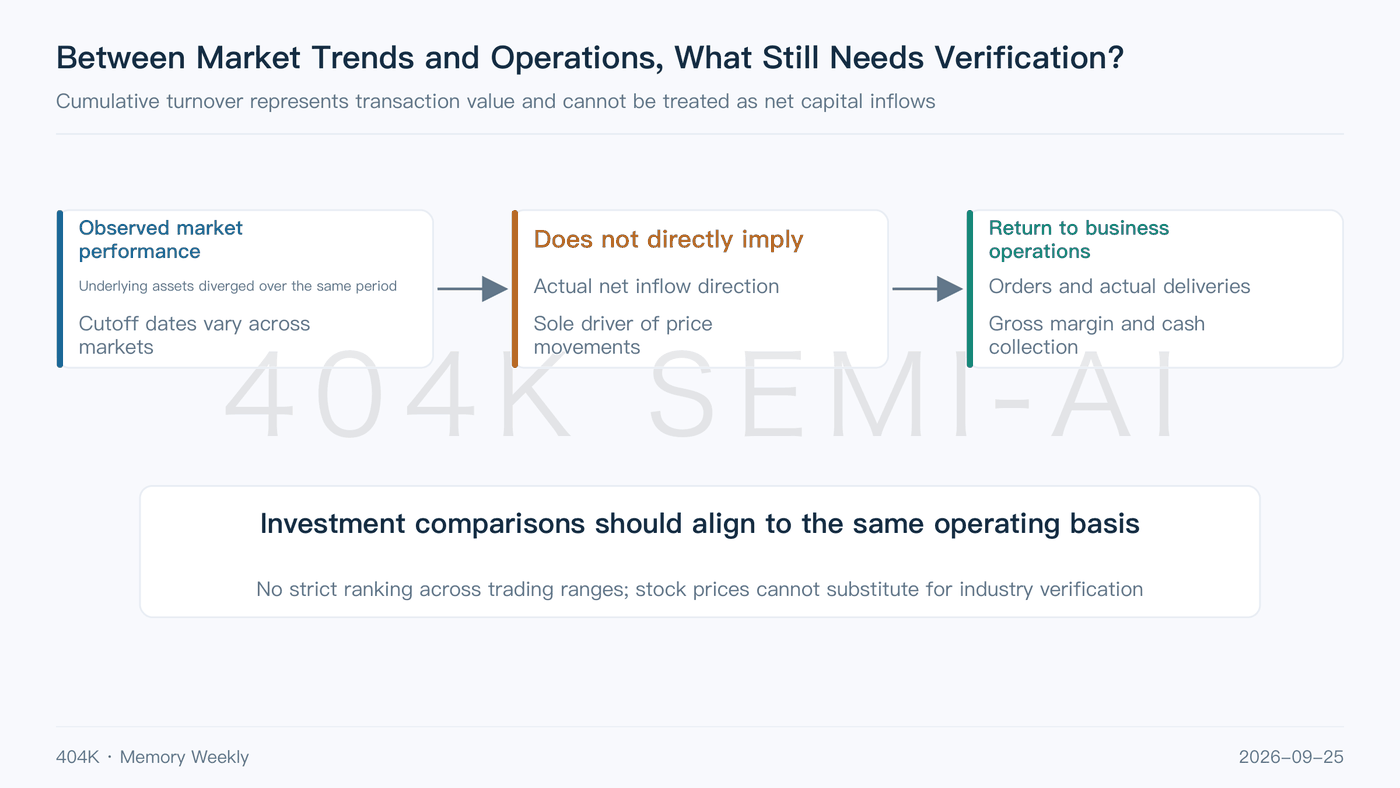
Over the same US trading window, Micron and SanDisk diverged in direction, confirming that institutional investors are not treating DRAM and NAND as interchangeable trades. Price action alone cannot distinguish whether performance gaps stem from shifting expectations, institutional positioning, or idiosyncratic corporate catalysts. Turnover reflects cumulative trading volume rather than net inflows; Western Digital's operational assessment in this report focuses strictly on its HDD segment.
DRAM & HBM: Allocation Power, LTAs, and Customer Qualification
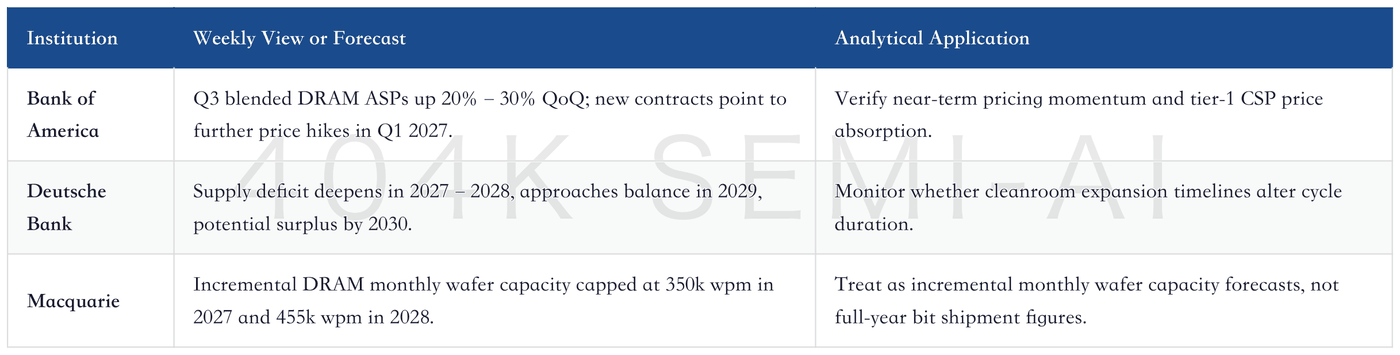
Near-term support for standard DRAM stems from broad customer acceptance of contract price hikes, while medium-term support for leading-edge nodes depends on customer qualifications and committed supply roadmaps. Bank of America's survey indicated that Q3 blended DRAM ASPs rose 20% to 30% QoQ, with cloud hyperscalers accepting new contracts that price Q1 2027 DRAM ASPs above Q4 2026 levels. While these figures reflect institutional survey findings rather than direct audit data, they mirror tier-1 procurement dynamics more accurately than volatile daily spot quotes.
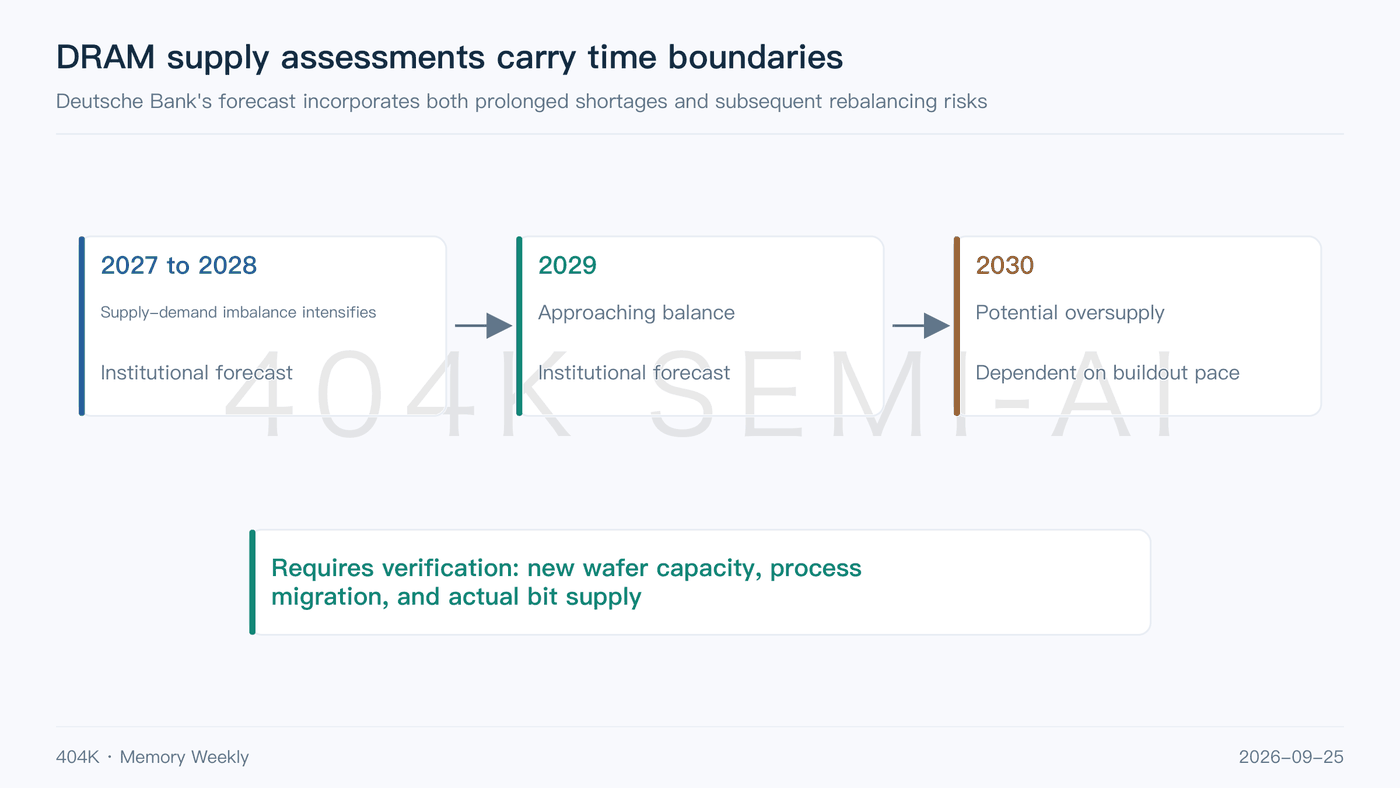
Announced fab additions are insufficient to immediately resolve supply tightness. Deutsche Bank projects that the DRAM supply-demand deficit will intensify through 2027 and 2028, before approaching balance in 2029 and potentially tipping into surplus by 2030. This projection depends on cleanroom construction and equipment lead times. While it supports the medium-term supply constraint thesis, it equally rejects the notion of an indefinite supercycle.
Institutional Assumptions on DRAM Supply
The true value of an LTA lies in shared risk allocation between customer and supplier. Industry reports this week indicate that Samsung Electronics is pushing for longer contract durations, SK Hynix is linking contracted volumes directly to customer product roadmaps, and Micron is expanding binding strategic customer agreements. While their strategic directions align, contractual fine print cannot be generalized. For instance, take-or-pay clauses in Micron's automotive agreements cannot be assumed to apply across all HBM buyers.
LTA Structures and Analytical Boundaries
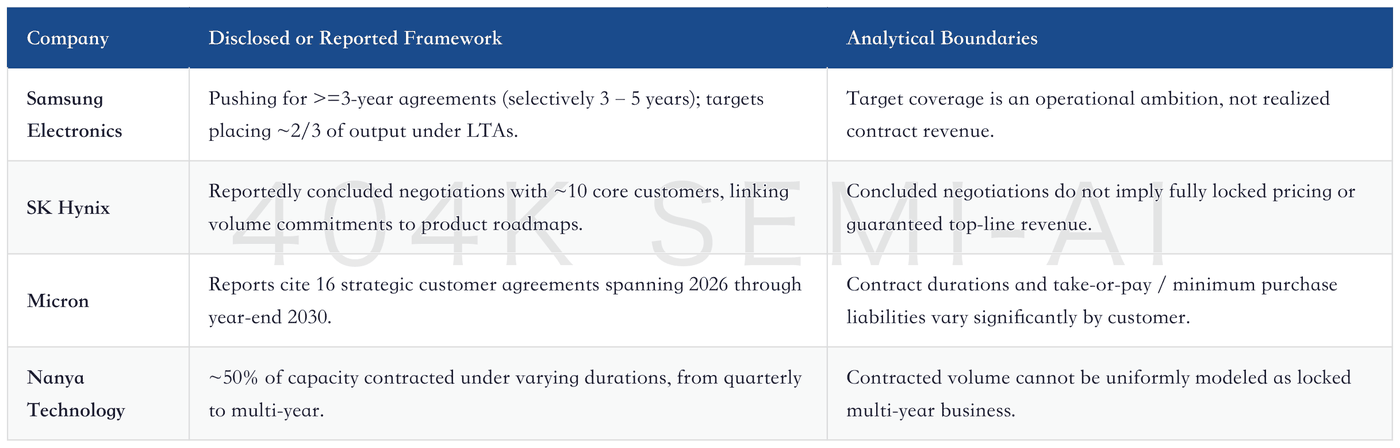
Nanya Technology's customer base is analytically instructive. Reports indicate that SanDisk and Kioxia have locked in long-term DRAM supply, confirming that enterprise SSD expansion drives complementary DRAM purchasing for drive controllers and cache. This structural link explains how NAND tightness spills over into DRAM demand; however, absent disclosed volume commitments, it cannot be used to quantify incremental revenue for Nanya Technology.